The Fool's mocking speeches adds entertainment to the scene. The fool sees clearly what is occurring between Lear and his daughters and finds it in a sense amusing. Lear's suspicion is raised in the opening speeches of the scene:
" This strange that they should depart from home
And not send back by messenger"
This means that Regan was up to something and did not want Lear knowing of her departure. The Fool continues observing Kent and Lear in their state and begins laughing and saying:
" Ha, ha ! Look he means cruel garters. Horses are tired by the heads, dogs and bears by the neck, monkeys by the lions, and men by the legs. When a man is overlusty at legs, then he wears wonder nether socks."
Metaphorically, the fool is saying that Lear is to be blamed for the ig norance and il treatment of his daughters towards him. When Lear had argeed ti offer up his inheritence to Goneril and Regan, a complete change in attitude occured. They showered him with compliments and what he believed was kindness. But now that hey have gotten what they want from him and Lear is poor, they are quick to disown him. The fool also predicts what is to come of Lear in the following year due to Regan and Goneril's mistreatment. He declares that instead of riches, pain will be brought upon Lear.
In the fool's other speeches, he addresses one in specific to Kent. The fool acknowledges that Kent is undertaking the foolish matters of the King and dissuades him from serving him. He states that now that the King is penny-less, no fortune will be brought to Kent. In the last words of the fool's speeches, he refers to Lear and encourages him that he should continue speaking to his heart since it will never change into a fool. In this scene, it is clear that being poor has now affected the King's mental state. This will occur since the King was a great man of power and now has fallen and has nothing.
Monday, November 8, 2010

Sunday, October 17, 2010
Answers to Act 2, Scene 1
1. The dramatic significance of Curan's reference to the impending war between the Duke of Albany and Cornwall is that Curan gives us a sense of Foreshadowing. This means that he is revealing what may be occurring in this scene, Act 2. Also, the news in which Curan gave to Edmund allows him to use it to his advantage in his plot to revenge his brother and father.
2. The trick Edmund uses to completely convince Gloucester of Edgar's guilt is him cutting himself and making it seem as if the "villain" had done it. Edmund uses this to point blame towards Edgar and his guilt for being legitimate which his brother was not.
3. In this scene, the part played by Regan is in a way revealing the plot of Edmund. Due to her conniving personality, Regan sees exactly what Edmund is trying to pursue. She therefore tries to paint a picture in Gloucester's mind but smartly. She does this by commenting on Edgar's personality and uses a sense of sarcasm in her statements.
4. From this scene, we learn that Cornwall's character is basically a person who is an impressionist and a person who seeks favours. He is easily persuaded. He enjoys complimenting people in order to get them to do what he wants or work in his favour.
2. The trick Edmund uses to completely convince Gloucester of Edgar's guilt is him cutting himself and making it seem as if the "villain" had done it. Edmund uses this to point blame towards Edgar and his guilt for being legitimate which his brother was not.
3. In this scene, the part played by Regan is in a way revealing the plot of Edmund. Due to her conniving personality, Regan sees exactly what Edmund is trying to pursue. She therefore tries to paint a picture in Gloucester's mind but smartly. She does this by commenting on Edgar's personality and uses a sense of sarcasm in her statements.
4. From this scene, we learn that Cornwall's character is basically a person who is an impressionist and a person who seeks favours. He is easily persuaded. He enjoys complimenting people in order to get them to do what he wants or work in his favour.
Wednesday, October 13, 2010
The Dramatic Significance of The Fool
The Jester or “The Fool” as he is often referred to in “King Lear” is a tremendous significance to the entire play. Ironically, he is often seen by the characters as a mere joke or sense of entertainment when actually, he is intelligent. The fool not only uses himself as an entertainment purpose but also he uses it a way to “eavesdrop” on the affairs of the characters.
From his observations, the fool sees it fit to voice his opinions about the characters’ actions. He jokes to Lear about his decisions. In a way, Fool can be viewed as Lear’s conscious. The fool understands exactly what is at hand and clearly Lear is afraid to see or to an extent admit what is taking place. Lear is too outraged to notice the detriment in which he has brought to his kingdom and also the special relationship in which he and Cordelia shared. Fool helps us, the readers understand the type of person Lear is and also recognize who is the worthy daughter.
Sunday, October 10, 2010
Questions pertaining to King Lear...
1. What insight are we given to King Lear's character in the opening scene?
The insight in which we are given to King Lear's character in the opening speeches is that he is a very arrogant man who thinks he is highly favoured by his people. Therefore because of his high status and the attitudes he carries along with it he feels he deserves a great amount of flattery. King Lear also seemed to be a man that did not like to undertake responsibility.
2. Compare the answers of Goneril and Regan to the King's demand to hear their extent of love for him.
Goneril and Regan knew their father, King Lear. They fully understood his personality traits. Lear knew deep down in his heart that Goneril and Regan did not love him the way Cordelia did. When Lear had demanded for their profession of their love for him he was not keeping that one detail in thought but more of which the daughters would flatter him the most. Therefore the two sisters plot to give Lear exactly what he wanted, that is a high declaration of their love for him. They saw it necessary to get what they wanted from him through any means possible even if it meant that they had to lie to him.
3. "Be Kent unmannerly" Do you think Kent is justified for saying that Lear is mad?
Yes, i believe that Kent is justified for saying that King Lear was mad. This is so because Lear had not gotten what he wanted which was an extravagant extent of Cordelia's love for him. In a way, he was not satisfied with her answer and was also very disappointed. Therefore, since he did not get what he wanted, Cordelia wouldn't either.
4.Why do you think Shakespeare has used rhyming lines in Kent's last speech?
Shakespeare used rhyming lines in Kent's last speech to create emphasis. Rhyming is used to make a point or to signify the importance of the lines mentioned by Kent. Kent also uses this in a way to give an insight of his thoughts to the other characters.
5.Show that the King of France's words to Cordelia are calculated to heal the wounds Lear has inflicted on her.
The King of France's words to Cordelia are calculated to heal the wounds Lear has inflicted on her by letting her know that her personality is worth much more than any riches and that he cherishes her. This in a sense comforts him. This is evident when he mentions, "Fairest Cordelia, that art most rich being poor..."
6. What is morally the state of affairs within the play at the close of the first scene?
The state of affairs morally within the play at the close of the first scene are that Goneril and Regan begin to scheme against their father and earlier on, the King disowns Cordelia which resulted in the King of France taking her instead of the Kind of Burgundy.
7. Act 1 Scene 2. What sort of excuse does Shakespeare let Edmund make for the course of villainy he is to pursue?
The excuse in which Shakespeare lets Edmund make for the course of villainy he is about to pursue is the fact that everyone called him a "bastard". This offended him greatly since he was often looked down upon and was also denied his inheritance due to his illegitimacy.
8. How does Edmund strenghten his plot while apparent to defend his brother?
Edmund strengthens his plot while apparent to defend his brother because this allows him to seem less guilty and suspicious towards his father's beliefs. This gives him the upper hand of his plan being easier to be taken into effect without anyone paying any mind to him and his actions.
9. Show how Glouchester's gullibility and Edgar's nobility plays into Edmund's hand.
Glouchester's gullibility and Edgar's nobility plays into Edmund's hand by both their personalities making it difficult for them to believe that Edmund was the one who really plotting against them.
Friday, October 8, 2010
Contrasting between the video clip and the book of "King Lear"

In Act 1 Scene 1, King Lear's rage is at it's highest peak. Lear had decided to divide the kingdom between his three daughter, Goneril, Regan and Cordelia but under one condition- they were to profess their feelings of their love towards him. In this scene, one may not fully understand Lear's distaste with Cordelia's response if they were reading the play from a book. The use of the book only allows the reader to use imagery.
The video clip intensified the anger in which Lear had towards Cordelia. The audience could see the reactions from the characters and also the two main characters affected, Lear ad Cordelia. In the clip, Cordelia seemed heart broken and Lear was mortified to the extent where he was outraged. This anger led to him making drastic decisions such as banishing Kent from the kingdom and withdrawing Cordelia from her inheritance. Additionally, other aspects were observed from the video such as the setting and the music used to set the mood of the play.
Sunday, October 3, 2010
King Lear's Reaction towards Cordelia
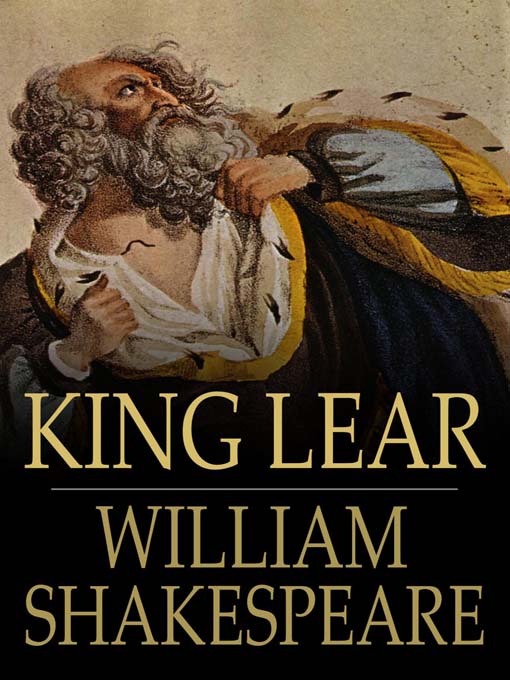
King Lear had decided to divide his kingdom between his three daughters, Goneril, Regan and Cordelia. He decided to allow his daughters to protest their deepest love for him and the one that did it the best would have gotten majority of the kingdom. King Lear favoured Cordelia, his youngest daughter and therefore thought that she would have given the best plea out of the three sisters. So the sisters began professig their love for their father and it was now Cordelia's turn. Cordeilia began by saying,
" Unhappy that I am, I cannot heave
My heart into my mouth. I love your majesty
According to my bond; no more nor less."
This further meaning that she understands her duty to love him as a father and a king. And that she didn't want to "heave" her heart into her mouth due to her integrity restraining her from making emphatic statements of her love towards him. Cordelia thought it was best to be simple and honest towards her father because she knew that she truly loved him.
Unfortunately, King Lear took Cordelia's simple statement as an offense and became furious. As a result, Cordelia was stripped of her title and her inheritance. Goneril and Regan knew exactly the type of person their father was and so in order to get what they wanted - the kingdom and authority, they had to manipulate his perception of their love for him.
King Lear's reaction towards Cordelia seemed harsh to an extent. This may be due to his personality and high status in that society. As a king he fails to understand that there is more to his role than just retrieving high praise and flattery from his people. Since Cordeila had failed to supply him with this and his two elder daughters, Goneril and Regan did, Lear felt that his youngest daughter's sincere words were just not enough for him. In a sense King Lear is viewed as a very arrogant man who is simply blind to the truth.
Sunday, September 19, 2010
CLEAR LIGHT OF DAY
“CLEAR LIGHT OF DAY”
Anita Desai is an Indian short story writer and novelist. She was born on June 24, 1937 in Mussoorie, India to German mother, Toni Nime and Bengali father, D.N. Mazumdar. She grew up speaking German at her residence and Hindi, Urdu, Bengali and English outside her home. At school, she first learned to read and write English resulting in her being attached to the language. Desai attended Queen Mary’s Higher Secondary in Delhi. In 1957, she received her Bachelor of Arts Degree in English Literature from the University of Delhi. She is a member of the Royal Society of Literature, the American Academy of Arts and Letters, Girton College, Cambridge and the Clare Hall, Cambridge. Anita Desai resides in the United States at present, where she is the John E. Buchard Professor of Writing at M.I.T. A few of her novels include “Fire on the Mountain” (1977), “In Custody” (1984), “Fasting, Feasting” (1999), “The Village by the Sea” (1982) and “Clear Light of Day” (1980). Desai’s nove, “Clear Light of Day” focuses on visual imagery and details. Her stories originate from rooted images thus the reason for Bim Das, the main character of “Clear Light of Day” frustration. She is an independent woman who is succumbed to her past memories. Her past is detailed in certain aspects of the family house in which she’s been living in for years. Bim’s sister, Tara recognizes the dullness and decay of their childhood when she pays Bim a visit. Tara feels as if everything she hated as a child has still been preserved in a metaphoric storeroom found in the household. During the book the sisters’ true feelings towards each other are revealed and they gain a better understanding of each other and an improved relationship. As Desia herself has said, her novels are not occupied by heroic characters of the traditional sense. She makes it of her utmost important that the characters reflect a sense of veracity.
PARTITION IN INDIA
Due to the various religious demographics in India, the creation of the partition of India on 14 August 1947 and 15 August 1947 resulted in the division of the sovereign states of the Dominion of Pakistan and the secular Union of India. The partition was decreed in the Indian Independence Act 1947 and resulted in the formal ending of the British Indian Empire. The partition moved up to 12.5 million people in the former British Indian Empire which estimated in the loss of life from millions.
The separation of India included the geographical division of Bengal into East Pakistan and west Bengal and many other divisions of states. The deal of the partition also included the dividing of state assets, including the British Indian Army, The Indian Civil Service and other services, the central treasury and the Indian railways. Due to the aftermath of the Partition there became a question of choice as to whether Jammu or Kashmir would have India or Pakistan or to remain outside them. This resulted in the Indo-Pakistan War of 1947.
THE VARIATION BETWEEN HINDU AND MUSLIM
HINDUISM
• Hinduism believes in body and soul. Your soul returns to your body after death. According to some, the cycle repeats seven times. This is known as Reincarnation.
• Cow is a sacred animal and a holy being for Hindus. They therefore cannot be killed or eaten in Hinduism.
• The Hindus’ perception of God is the philosophy of Pantheism. Pantheism considers everything whether it may be living or non-living, to be divine and sacred. A common Hindu would consider everything to be his/her God.
• The Hindus believe in multiple Gods. While some Hindus believe in the existence of three gods and some to the extent of 330 million gods. Hindus who are versed in their scriptures insist that a Hindu should believe in one God.
MUSLIMS
• Muslims believe that each person has a body and soul. At death, your body is separated from your soul. Your actions and faith will determine your fate in the After Life. Judgement Day will come to everyone. All humans from Adam will be brought to a second life, rejoining body and soul. On that day God will put the respective persons in either Heaven or Hell based on theie beliefs and deeds of this life.
• Muslims eat all wholesome food including the meat of Cows and lambs, goats and chicken.
• Islam exhorts man to consider himself and his surroundings as examples of Divine Creation rather than the divinity of itself. Muslims believe that everything belongs to God. All that surrounds us is God’s Possession.
• In Islam, all humans are created equal. Islam rejects characterizing God in any human form or depicting Him as favouring certain individuals or nations on the basis of wealth , race or power. He created all human beings equally and therefore they must earn his favour through virtue and faithfulness only.
MOHANDAS KARAMCHAND GANDHI
Mohandas Karamchad Gandhi was born on 2 October 1869 in Porbander, Gujarat, India. He was the political and spiritual leader of India during the Indian Independence movement. He pioneered the resistance to tyranny through mass civil disobedience. He believed in dealing with this matter with no violence which resulted in India gaining its independence and influenced movements for instance civil rights and freedom across the world. Gandhi has been given names such as “Great Soul” and “Father”. Indians refer to him as Father of the Nation. As a practitioner of Ahima, Gandhi swore to speak the truth and encouraged others to do the dame. He lived a modest life in a self sufficient residential village, ate simple vegetarian dishes and undertook long fasts as a way of self purification and social protest. On 30 January 1948, Gandhi was shot while he was walking to an area in which he was to address a prayer meeting. Gandhi’s ashes were poured into urns which were sent across India for memorial services.
Anita Desai is an Indian short story writer and novelist. She was born on June 24, 1937 in Mussoorie, India to German mother, Toni Nime and Bengali father, D.N. Mazumdar. She grew up speaking German at her residence and Hindi, Urdu, Bengali and English outside her home. At school, she first learned to read and write English resulting in her being attached to the language. Desai attended Queen Mary’s Higher Secondary in Delhi. In 1957, she received her Bachelor of Arts Degree in English Literature from the University of Delhi. She is a member of the Royal Society of Literature, the American Academy of Arts and Letters, Girton College, Cambridge and the Clare Hall, Cambridge. Anita Desai resides in the United States at present, where she is the John E. Buchard Professor of Writing at M.I.T. A few of her novels include “Fire on the Mountain” (1977), “In Custody” (1984), “Fasting, Feasting” (1999), “The Village by the Sea” (1982) and “Clear Light of Day” (1980). Desai’s nove, “Clear Light of Day” focuses on visual imagery and details. Her stories originate from rooted images thus the reason for Bim Das, the main character of “Clear Light of Day” frustration. She is an independent woman who is succumbed to her past memories. Her past is detailed in certain aspects of the family house in which she’s been living in for years. Bim’s sister, Tara recognizes the dullness and decay of their childhood when she pays Bim a visit. Tara feels as if everything she hated as a child has still been preserved in a metaphoric storeroom found in the household. During the book the sisters’ true feelings towards each other are revealed and they gain a better understanding of each other and an improved relationship. As Desia herself has said, her novels are not occupied by heroic characters of the traditional sense. She makes it of her utmost important that the characters reflect a sense of veracity.
PARTITION IN INDIA
Due to the various religious demographics in India, the creation of the partition of India on 14 August 1947 and 15 August 1947 resulted in the division of the sovereign states of the Dominion of Pakistan and the secular Union of India. The partition was decreed in the Indian Independence Act 1947 and resulted in the formal ending of the British Indian Empire. The partition moved up to 12.5 million people in the former British Indian Empire which estimated in the loss of life from millions.
The separation of India included the geographical division of Bengal into East Pakistan and west Bengal and many other divisions of states. The deal of the partition also included the dividing of state assets, including the British Indian Army, The Indian Civil Service and other services, the central treasury and the Indian railways. Due to the aftermath of the Partition there became a question of choice as to whether Jammu or Kashmir would have India or Pakistan or to remain outside them. This resulted in the Indo-Pakistan War of 1947.
THE VARIATION BETWEEN HINDU AND MUSLIM
HINDUISM
• Hinduism believes in body and soul. Your soul returns to your body after death. According to some, the cycle repeats seven times. This is known as Reincarnation.
• Cow is a sacred animal and a holy being for Hindus. They therefore cannot be killed or eaten in Hinduism.
• The Hindus’ perception of God is the philosophy of Pantheism. Pantheism considers everything whether it may be living or non-living, to be divine and sacred. A common Hindu would consider everything to be his/her God.
• The Hindus believe in multiple Gods. While some Hindus believe in the existence of three gods and some to the extent of 330 million gods. Hindus who are versed in their scriptures insist that a Hindu should believe in one God.
MUSLIMS
• Muslims believe that each person has a body and soul. At death, your body is separated from your soul. Your actions and faith will determine your fate in the After Life. Judgement Day will come to everyone. All humans from Adam will be brought to a second life, rejoining body and soul. On that day God will put the respective persons in either Heaven or Hell based on theie beliefs and deeds of this life.
• Muslims eat all wholesome food including the meat of Cows and lambs, goats and chicken.
• Islam exhorts man to consider himself and his surroundings as examples of Divine Creation rather than the divinity of itself. Muslims believe that everything belongs to God. All that surrounds us is God’s Possession.
• In Islam, all humans are created equal. Islam rejects characterizing God in any human form or depicting Him as favouring certain individuals or nations on the basis of wealth , race or power. He created all human beings equally and therefore they must earn his favour through virtue and faithfulness only.
MOHANDAS KARAMCHAND GANDHI
Mohandas Karamchad Gandhi was born on 2 October 1869 in Porbander, Gujarat, India. He was the political and spiritual leader of India during the Indian Independence movement. He pioneered the resistance to tyranny through mass civil disobedience. He believed in dealing with this matter with no violence which resulted in India gaining its independence and influenced movements for instance civil rights and freedom across the world. Gandhi has been given names such as “Great Soul” and “Father”. Indians refer to him as Father of the Nation. As a practitioner of Ahima, Gandhi swore to speak the truth and encouraged others to do the dame. He lived a modest life in a self sufficient residential village, ate simple vegetarian dishes and undertook long fasts as a way of self purification and social protest. On 30 January 1948, Gandhi was shot while he was walking to an area in which he was to address a prayer meeting. Gandhi’s ashes were poured into urns which were sent across India for memorial services.
Subscribe to:
Posts (Atom)
